Solar eclipses in 2030: dates, types and visibility
There are 2 solar eclipses in 2030: 1 annular, 1 total. The table preserves NASA/GSFC’s published date, greatest-eclipse time, Saros series, magnitude, duration and broad visibility wording.
2030 solar eclipse dates: quick answer
— Annular solar eclipse; greatest eclipse 06:29:13 TD.
— Total solar eclipse; greatest eclipse 06:51:37 TD.
Protect your eyes. Except during the brief total phase of a total eclipse, looking directly at the Sun without specialized solar viewing protection is unsafe. Partial and annular eclipses have no safe naked-eye phase. Follow NASA’s eclipse viewing safety guidance.
s Africa, s Indian Oc., E. Indies, Australia, Antarctica — [Total: Botswana, S. Africa, Australia]
Maps and path detail
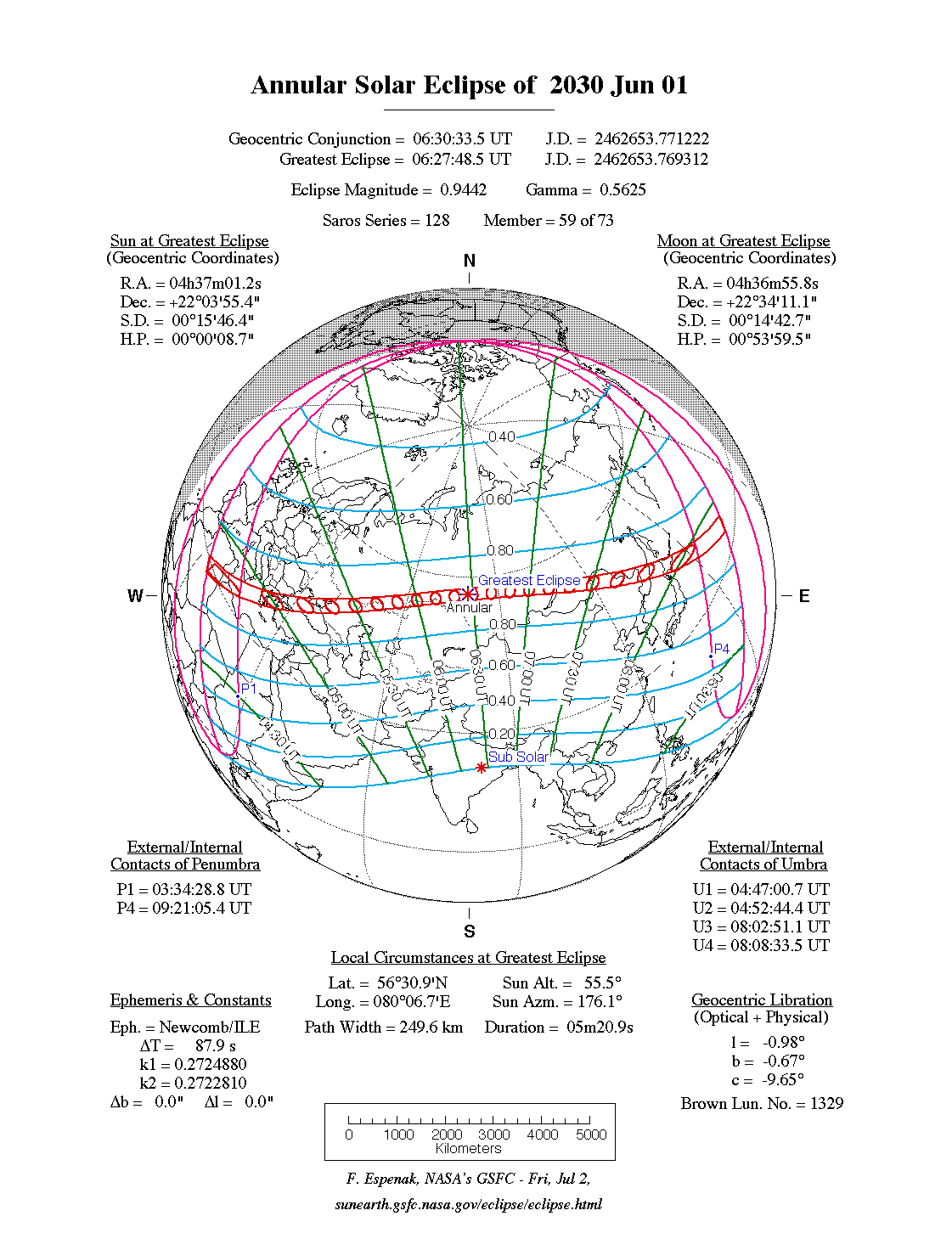
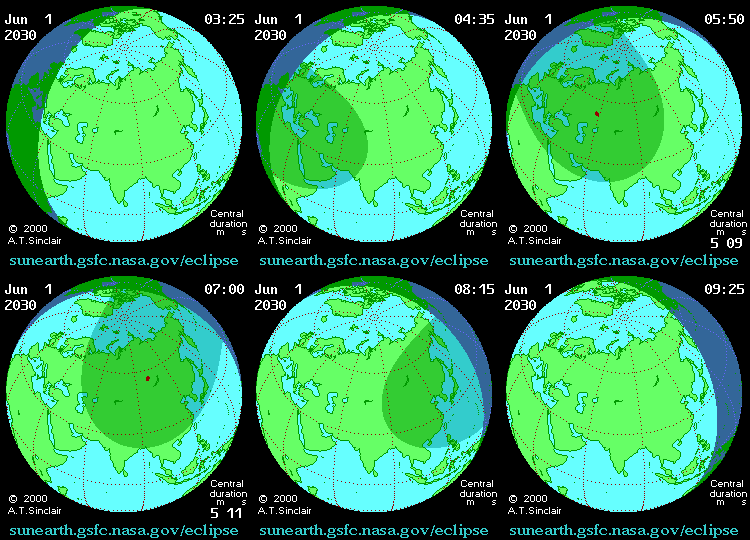
Annular eclipse — 1 June 2030
NASA’s broad visibility summary is: Europe, n Africa, Mid East, Asia, Arctic, Alaska — [Annular: Algeria, Tunisia, Greece, Turkey, Russia, n. China, Japan]. This does not establish visibility from a particular address.
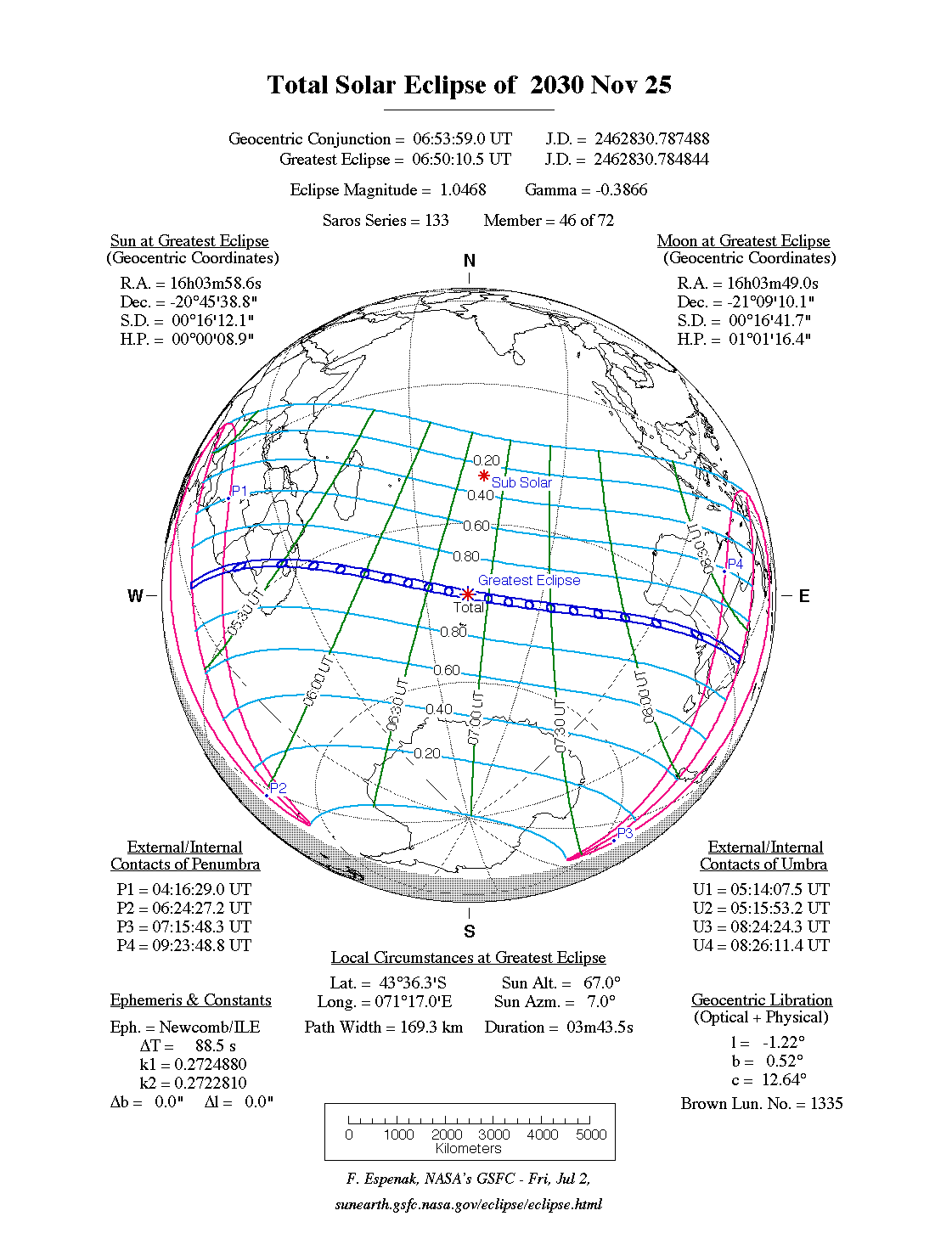
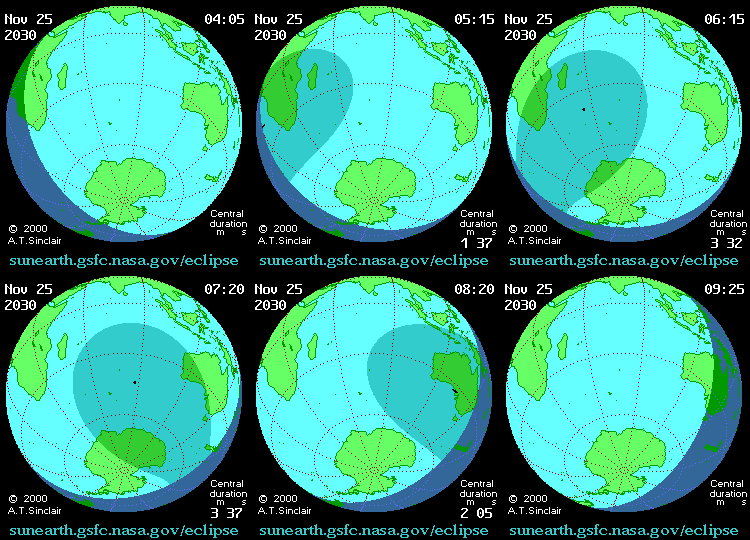
NASA’s broad visibility summary is: s Africa, s Indian Oc., E. Indies, Australia, Antarctica — [Total: Botswana, S. Africa, Australia]. This does not establish visibility from a particular address.
Greatest eclipse is the instant when the Moon’s shadow axis passes closest to Earth’s center; NASA’s decade table labels this time TD.
Magnitude describes the fraction of the Sun’s diameter covered at greatest eclipse for central eclipses, using NASA’s catalog value.
Saros identifies the eclipse series. It is not a visibility score.
Central duration applies to annular, total and hybrid eclipses; partial eclipses do not have a central phase.
Source and limits
The rows are a checked-in snapshot of the NASA/GSFC Solar Eclipse Decade Table covering 2030, retrieved 2026-09-20. Required credit: Eclipse Predictions by Fred Espenak, NASA/GSFC. Production builds and visits make no source-network request.
The page does not compute local contact times, obscuration, altitude or weather. The NASA map links are the source for geographic path detail; observers should use an authoritative local-circumstances tool and follow solar-viewing safety guidance.
FAQ
How many solar eclipses are there in 2030?
There are 2 solar eclipses in 2030: 1 annular, 1 total.
When are the solar eclipses in 2030?
1 June 2030 (annular); 25 November 2030 (total).
Is every 2030 solar eclipse visible worldwide?
No. Solar-eclipse visibility depends on the path of the Moon’s shadow. The regions on this page are broad NASA summaries; use the linked NASA maps for geographic detail.